Queen Elizabeth National Park – Uganda’s Most Varied Park
Queen Elizabeth National park lies in western Uganda between Lake George and Lake Edward, in the Albertine Rift, with the Rwenzori Mountains rising to the north. It covers about 1,978 square kilometres, was founded in 1952 as Kazinga National Park by combining two game reserves, and holds more than 95 mammal species, ten primate species and more than 600 bird species, which is among the highest counts in Africa for a single park.
This guide explains Queen Elizabeth for travellers planning a stay. It covers the park’s geography and its four main areas, the wildlife, the Kazinga Channel cruise, game drives and the Ishasha lions, Kyambura Gorge and the Maramagambo Forest, the crater lakes and salt works, birdwatching, fees, lodges, how to get there, the best time to go, sample itineraries, a short current health note and the mistakes to avoid. Where published figures differ, such as park entry and lodge rates, the guide gives the ranges. Our separate guides to Queen Elizabeth safaris, to boat cruises and to the lodges in the park go into more detail.
Queen Elizabeth National Park at a Glance
| Question | Short Answer |
| Where | Western Uganda, between Lake George and Lake Edward, with the Rwenzori Mountains to the north |
| Size and history | About 1,978 square kilometres; founded in 1952 as Kazinga National Park and renamed after the Queen a couple of years later |
| Wildlife | More than 95 mammal species, ten primate species and more than 600 bird species |
| Main attractions | The Kazinga Channel, Ishasha’s tree-climbing lions, Kyambura Gorge chimpanzees, the Kasenyi plains and the crater lakes |
| Park entry | About US$40 per adult per day, and US$20 for a child |
| Best months | June to September and December to February |
| Ideal stay | Three to four nights, split between two areas |
The park is large and the main areas are a long drive apart, so choose your priorities and base yourself accordingly.
Geography and the Four Main Areas
| Area | Best For | What You Will Find |
| Mweya Peninsula and the Kazinga Channel | A central base, boat trips and game drives on the Kasenyi plains | Mweya Safari Lodge, Queen Elizabeth Bush Lodge, Enganzi Game Lodge and Katara Lodge in guides |
| Kyambura Gorge, in the east | Chimpanzee tracking and gorge views | Kyambura Gorge Lodge and other lodges nearby |
| Ishasha, in the south | Tree-climbing lions and a wilder feel | Ishasha Wilderness Camp, Elephant Plains Lodge and Ishasha Jungle Lodge |
| Maramagambo Forest side | Forest walks, crater lakes and birds | Lodges on the forest edge, reached by tracks |
The park’s lowest point is the shore of Lake Edward at about 910 metres, and its highest is the Katwe explosion craters at about 1,350 metres, which gives the landscape its gentle relief. It is managed together with the Kyambura and Kigezi Wildlife Reserves. Our separate guide to Uganda’s national parks explains how it connects with Kibale to the north-east.
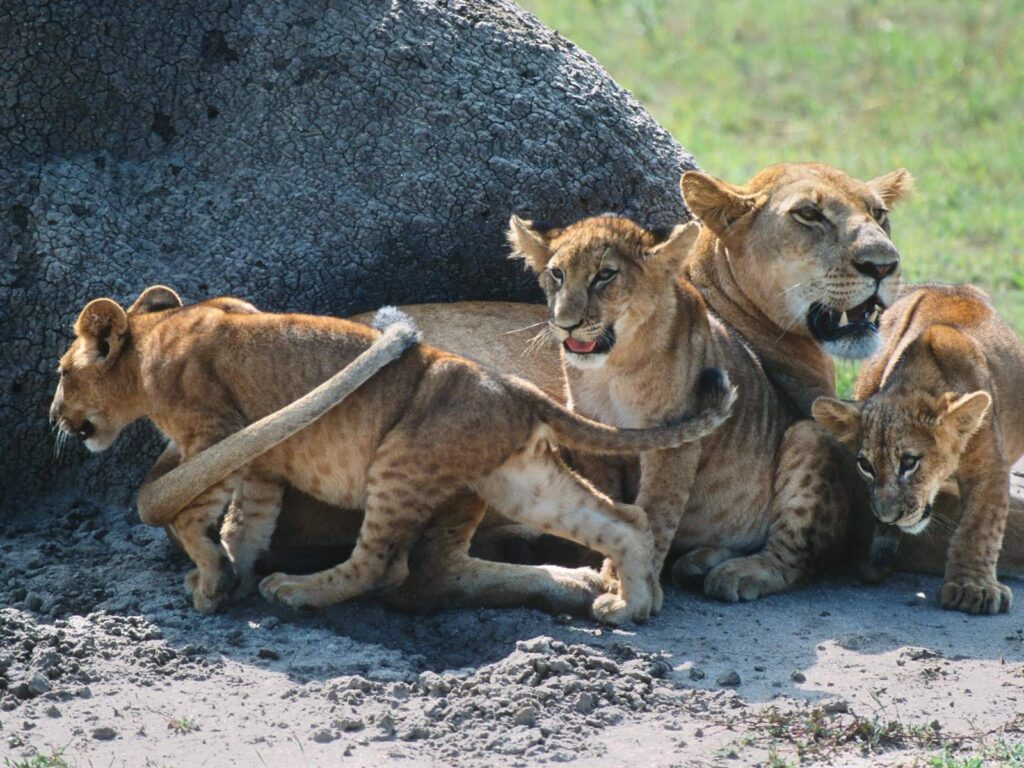
The Wildlife
| Animal | Where | Notes |
| Lions | The Kasenyi plains and Ishasha | Queen Elizabeth is one of Uganda’s principal lion parks |
| Elephants and buffalo | The savannah and the channel banks | Large herds, often seen from boats |
| Leopards | The savannah and forest edges | Elusive; patience and a good guide help |
| Uganda kob, waterbuck and giant forest hog | The plains and forest | Kob gather in very large numbers on the Kasenyi plains |
| Hippos and crocodiles | The Kazinga Channel and lakes | Seen at close range from boats |
| Chimpanzees and other primates | Kyambura Gorge and Maramagambo | Ten primate species in guides |
| Spotted hyenas | The savannah | Seen mostly at dusk and dawn |
The park’s variety, from open plains to forest to water, means the wildlife changes as you move. Our separate guide to wildlife safaris in Uganda explains where to find each animal.
The Kazinga Channel Cruise
The Kazinga Channel is the park’s most famous feature. It is a wide natural channel, about 32 kilometres long in one reference and 40 in another, which links Lake George and Lake Edward, and its banks are crowded with hippos, crocodiles, buffalo and elephants, with a rich bird list overhead. Boats leave from the Mweya Peninsula, and a cruise of two to three hours takes you along the banks at very close range. Kingfishers, fish eagles and African skimmers are among the birds named in guides, and one guide claims more than 2,000 hippos live along the channel, a figure that should be treated cautiously.
A morning cruise suits birdwatchers, and an afternoon cruise gives good light and a sunset atmosphere. It is one of the best wildlife cruises in Africa and an excellent family activity. Our separate guide to boat cruises in Uganda explains the options and prices.
Game Drives, Kasenyi and the Ishasha Lions
| Area | What to Expect | Notes |
| Kasenyi plains | Large herds of kob, with buffalo, elephants and lions, best at dawn and dusk | Close to Mweya; a short drive |
| Mweya tracks | Elephants, warthogs and waterbuck on the peninsula tracks | Easy for a first drive |
| Ishasha sector | Lions that rest in the branches of fig and acacia trees, one of very few places where this is regularly seen, with black-maned males reported | A long drive from Mweya; best to stay in Ishasha |
| Crater lakes and the Katwe craters | Volcanic cones, crater lakes with flamingos and a salt works at Lake Katwe | Scenic drives and a good photograph |
The tree-climbing lions are best seen in the early morning and late afternoon, according to guides. A sighting is likely but never guaranteed, and a patient guide helps. If tree-climbing lions are your priority, stay in Ishasha. Our separate guide to Queen Elizabeth National Park safaris explains how to plan the days.
Kyambura Gorge and the Maramagambo Forest
Kyambura Gorge is a steep, forested ravine carved by the Kyambura River into the savannah, and its floor holds habituated chimpanzees. Tracking involves a descent into the gorge and a walk through dense forest, so reasonable fitness is needed. The permit is US$100 in the 2024 to 2026 tariff, with US$200 reported from January 2027, against US$250 and US$300 at Kibale, and sightings are less predictable than at Kibale. The minimum age is 12 in the guidelines cited by several guides.
The Maramagambo Forest, south of the Kazinga Channel, has most of the park’s walking trails, taking hikers through forest, past crater lakes and to the Bat Cave, where fruit bats roost and rock pythons occasionally prey on them. Guides also name the Blue Lake and the Hunters Cave. Our separate guide to chimpanzee trekking in Uganda and Rwanda compares Kyambura with Kibale and Budongo.
Birdwatching
- More than 600 species have been recorded, which is among the highest counts in Africa for a single park.
- African skimmers and a long list of waterbirds are easiest to see from a boat on the Kazinga Channel.
- Flamingos are recorded on the crater lakes, and shoebills occasionally in the wetlands.
- The African fish eagle, papyrus gonolek and kingfishers are among the species named in guides.
- Maramagambo and Kyambura add forest birds, including the Rwenzori turaco.
- Migrants from the northern winter add to the list from about November to April.
Our separate guide to birding safaris in Uganda explains how Queen Elizabeth fits with Mabamba, Bwindi and Kibale.
Fees and Where to Stay
| Item | Reported Cost |
| Park entry, per adult per 24 hours | About US$40, with US$45 in one guide; children about US$20 |
| Kyambura chimpanzee tracking | US$100, with US$200 reported from 2027 |
| Lodging, budget to mid-range | About US$90 to US$180 at the Bush Lodge and about US$120 to US$250 for mid-range |
| Lodging, luxury | About US$300 to US$500, and US$600 to US$1,200 or more at the top camps |
| Daily budgets | About US$150 to US$350 budget, US$300 to US$700 mid-range and US$600 to over US$1,500 luxury in 2027 planning ranges |
Lodge rates differ widely between guides, so ask for a written quote. Park entry is charged per 24 hours, so a stay that crosses midnight can add a day. Our separate guides to the best lodges in Queen Elizabeth and to Uganda safari prices for 2027 explain the options.
How to Get There and Best Time to Visit
| Topic | What to Know |
| By road | A long drive from Kampala or Entebbe, often broken at Lake Mburo, and a convenient link to Bwindi via Ishasha |
| By air | Scheduled and charter flights serve the Mweya airstrip, according to earlier research for this series |
| June to September | The main dry season and busiest period; easier roads, especially in Ishasha |
| December to February | A second dry season with good conditions |
| March to May and October to November | The rains, with greener landscapes, harder tracks and lower prices |
Queen Elizabeth can be visited all year, and boat trips and birding work in every month. Our separate guide to the best time to visit Uganda explains the calendar.
Sample Itineraries and a Current Health Note
| Trip | Plan | Best For |
| 3 days | Mweya for two nights with two game drives and a boat trip, plus a morning at Kyambura | A short trip with the classic activities |
| 4 days | Two nights at Mweya and two at Ishasha, with the tree-climbing lions | Variety without too much driving |
| 5 days | As above, with Kibale chimpanzees on the road in or out | Primates and wildlife |
| 8 to 10 days | Kibale, Queen Elizabeth including Ishasha, Bwindi and Lake Mburo | The classic western circuit |
Split your nights between two areas, and keep a rest day if you add a gorilla trek.
Frequently Asked Questions
How big is Queen Elizabeth National Park?
About 1,978 square kilometres.
Where can I see tree-climbing lions?
In the Ishasha sector in the south, best in the early morning and late afternoon.
How much is Kyambura chimpanzee tracking?
US$100 in the 2024 to 2026 tariff, with US$200 reported from 2027.
How much is park entry?
About US$40 per adult per 24 hours, though one guide gives US$45.
How many days do I need?
Three to four nights, split between two areas.