Murchison Falls National Park – The Falls, the Nile
Murchison Falls National Park is about 3,840 square kilometres, it is Uganda’s largest park, and its location, a few hours from Kampala, makes it the easiest of the big parks to reach.
This guide explains Murchison Falls for travellers planning a trip. It covers the park’s history and geography, the wildlife, the main activities and what they cost, the two banks and how they differ, Budongo and the chimpanzees, birding, lodges and rates, how to get there, the best time to go, sample itineraries, a short current health note and the mistakes to avoid.
Murchison Falls National Park at a Glance
| Question | Short Answer |
| Where | North-west Uganda, between Masindi and the Albertine Rift, where the Nile enters Lake Albert |
| Size and status | About 3,840 square kilometres; first gazetted as a game reserve in 1926 and made a national park in 1952 |
| Wildlife | 76 mammal species and about 451 bird species, with elephants, lions, leopards, buffalo, Rothschild’s giraffes, hippos and crocodiles |
| Main activities | The Nile cruise to the falls, the delta cruise, northern game drives, the Top of the Falls hike and Budongo chimpanzees |
| Park entry | About US$45 per adult per 24 hours, and US$25 for a child |
| Best months | December to February and June to September |
| Ideal stay | Three to five nights |
Murchison Falls has no single expensive permit, so costs are driven by the lodge you choose and the number of days you stay.
History, Geography and the Greater Conservation Area
The park lies in the north-west of Uganda, where the Bunyoro escarpment falls away into palm-dotted savannah. It was first gazetted as a game reserve in 1926 and was made a national park in 1952. Together with the Bugungu and Karuma Wildlife Reserves, which cover about 750 and 720 square kilometres, and other adjoining reserves, it forms the Murchison Falls Conservation Area. The falls were called Kabalega Falls during the Amin era, and the name reverted to Murchison Falls afterwards.
The park is also a place where tourism and development meet. Wikipedia notes that the East African Crude Oil Pipeline project includes oil well pads, a feeder pipeline and a refinery in and around the park, and that in 2019 Uganda rejected a hydropower project at the falls to preserve one of its most lucrative tourism sites. Visitors may see construction in places, and it is worth asking your guide about current conditions.
The Wildlife
| Animal | Where and How to See It | Notes |
| Elephants | The northern plains and the riverbanks | The park holds Uganda’s largest elephant population, according to one 2026 guide |
| Rothschild’s giraffes | The northern Savannah, especially the Bugungu sector | One of the rarest giraffe subspecies; sightings are consistently reported |
| Lions and leopards | The northern plains, with patience | Lions are the main cats of the game drives |
| Buffalo, Uganda kob, hartebeest and oribi | Across the savannah | Large herds of kob and buffalo are common |
| Hippos and Nile crocodiles | The Nile, from boats | Crocodile numbers are among the highest recorded in East Africa, according to the Authority |
| Chimpanzees and other primates | Budongo Forest, Kaniyo Pabidi and Rabongo | A forest day is a good contrast to the plains |
| Shoebill | The Nile delta and papyrus swamps | A target bird for the delta cruise |
The park combines Savannah, woodland, wetland and forest, so a trip rarely feels repetitive. Our separate guide to wildlife safaris in Uganda explains where to see each animal.
Activities and What They Cost
| Activity | What It Involves | Reported Cost |
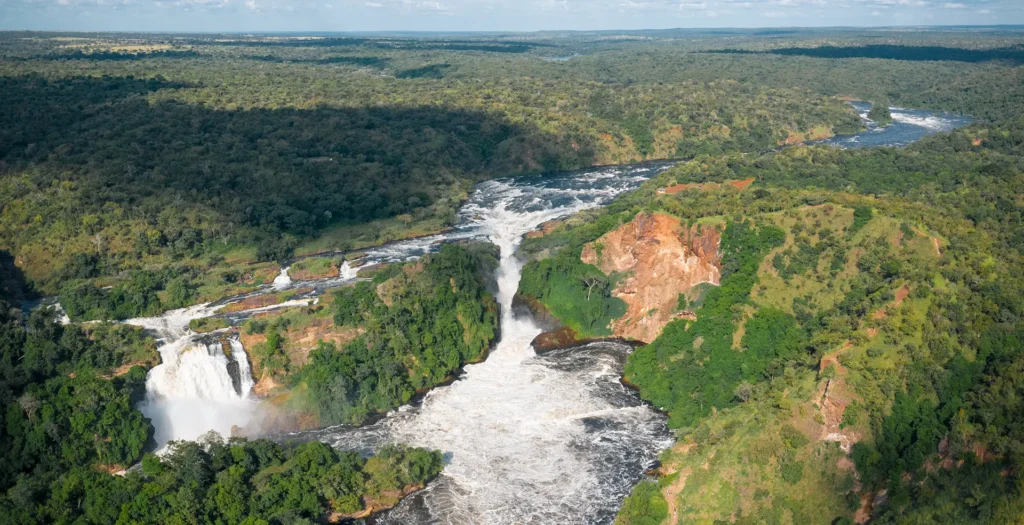
| Nile cruise to the falls | A cruise of about three hours upstream from the Paraa jetty to the base of the falls, past hippos, crocodiles and elephants | About US$30 per person |
| Nile delta cruise | A cruise downstream, about 20 kilometres to the delta where the Nile meets Lake Albert, for the shoebill and waterbirds | About US$40 in one guide and from US$55 in another |
| Top of the Falls hike | A short walk from the boat landing to the lip of the falls, where the ground shakes | About US$15 per person in one guide |
| Northern game drives | Drives on the Buligi tracks and the northern plains, with the best light at dawn and in the late afternoon | Priced by your operator; park entry applies |
| Delta swamp walks | Guided walks of two to four hours in the delta for possible shoebill sightings | Priced by the park |
| Chimpanzee tracking | Budongo Forest, including the Kaniyo Pabidi area | About US$130 in one guide |
| Nature walks | Rabongo Forest, Kaniyo Pabidi and the top of the falls | Priced by the park |
A good day combines an early game drive, a rest at midday and a boat trip in the afternoon. A couple who take both cruises pay about US$140 at the reported prices, since 2 x (US$30 + US$40) is US$140, before park entry. Our separate guide to boat cruises in Uganda explains the cruises in detail.
North Bank or South Bank?
| Factor | North Bank | South Bank |
| Access | Reached from Paraa by crossing the Nile on a ferry of about ten minutes that runs from early morning, with entry through the Tangi gate | The side where the Masindi road arrives, with the Paraa jetty and ferry crossing |
| Game drives | The primary game-drive circuit, where giraffes, lions and large buffalo herds are most reliably seen | Quieter, with game drives requiring a crossing |
| Lodges | Chobe Safari Lodge and Pakuba Safari Lodge in guides | Baker’s Lodge, Nile Safari Lodge, Murchison River Lodge, Fort Murchison and Sambiya River Lodge in guides; Paraa Safari Lodge and Red Chilli Rest Camp sit at the Paraa ferry crossing, and guides group them differently |
| Best for | Game drives and easy access | Seclusion and birdlife |
If you have the time, spend a night or two on each bank. The lodge groupings come from 2026 guides and the guides disagree on which bank some lodges sit on, so ask your operator which bank each lodge is on, and confirm the ferry details, which come from one guide. Our separate guide to the best lodges in Murchison Falls compares each lodge and its reported rates.
Budongo, Rabongo and Kaniyo Pabidi:
South of the Savannah, closed-canopy forest takes over. Budongo Forest Reserve, covering about 435 square kilometres, is contiguous with the Kaniyo Pabidi forest, which lies on the Masindi road, and it is described as the largest mahogany forest in East Africa, with one of Uganda’s largest chimpanzee populations. Rabongo Forest lies in the far south-east of the park, around the park’s highest point, Rabongo Hill.
Chimpanzee tracking at Kaniyo Pabidi costs about US$130 in one guide, and the forests offer guided nature walks for primates, birds and plants. Budongo is also a birding site, with about 360 species including Nahan’s francolin on the Royal Mile. Our separate guide to chimpanzee trekking in Uganda and Rwanda explains how Budongo compares with Kibale and Kyambura.
Where to Stay: A Short Guide
| Level | Typical Rate Per Person Per Night | Examples Named in 2026 Guides |
| Budget | About US$40 to US$120 | Red Chilli Rest Camp and simple camps |
| Mid-range | About US$120 to US$250 | Murchison River Lodge, Fort Murchison, Pakuba and Sambiya River Lodge |
| Luxury | About US$300 to US$500 | Paraa Safari Lodge, Chobe Safari Lodge and Baker’s Lodge |
| Ultra-luxury | About US$550 to over US$1,000 | Nile Safari Lodge, with rates that vary widely between guides |
Rates for the same lodge differ several times over between guides, so use these as bands and ask for a written quote. Our separate guide to Uganda safari prices for 2027 explains the daily ranges.
How to Get There and Best Time to Visit
| Topic | What to Know |
| By road | A long day from Kampala or Entebbe, with a stop at Ziwa Rhino Sanctuary on the way |
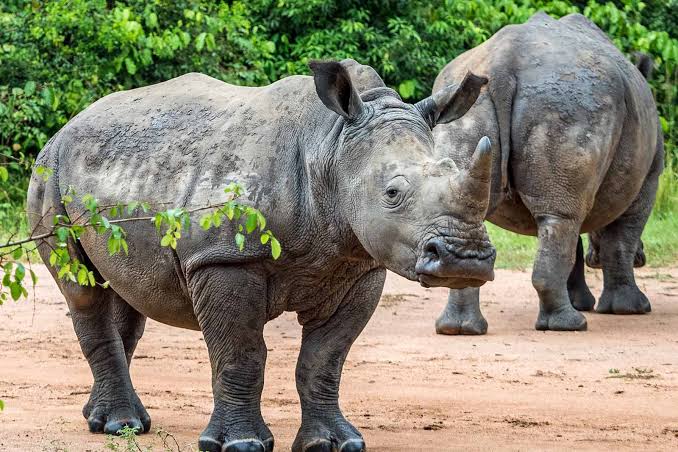
| Ziwa Rhino Sanctuary | About 176 kilometers north of Kampala; southern white rhinos tracked on foot |
| December to February | A dry season with good game viewing, a classic window for the northern plains |
| June to September | The main dry season and the busiest period |
| March to May and October to November | The rains, with greener landscapes, some harder tracks and lower prices |
Boat trips work in every month, and game drives are easiest in the dry seasons. Our separate guide to the best time to visit Uganda explains the calendar.
Sample Itineraries and a Current Health Note
| Trip | Plan | Best For |
| 3 days | Ziwa rhino tracking, then Murchison Falls with a game drive and a boat trip | A short Big Five trip |
| 4 to 5 days | Ziwa, three nights in the park with two game drives, a falls cruise and a delta cruise, plus Budongo chimpanzees | First-time visitors |
| 8 to 9 days | The five-day plan plus Kidepo | Adventurous travelers |
Frequently Asked Questions
How big is Murchison Falls National Park?
About 3,840 square kilometers, Uganda’s largest park.
How wide is the gap at the falls?
About 7 meters, with a drop of 43 meters, according to one reference.
How much is the boat cruise?
About US$30 for the Nile cruise to the falls and about US$40 to US$55 for the delta cruise.
How much is park entry?
About US$45 per adult per 24 hours in the 2024 to 2026 tariff.
How many days do I need?
Three to five nights is ideal.