Wildlife Safaris in Uganda – Where to See What
| Animal | Best Parks | Notes |
| Lion | Queen Elizabeth, especially Ishasha, Murchison Falls and Kidepo | The tree-climbing lions of Ishasha are the signature sighting |
| Leopard | Queen Elizabeth, Murchison Falls and Kidepo | Elusive; Kidepo is described as strongest in one guide |
| Elephant | Murchison Falls, Queen Elizabeth and Kidepo | Seen on game drives and from boats |
| Rhino | Ziwa Rhino Sanctuary, with 2026 reintroductions at Ajai and Kidepo | Southern white rhinos tracked on foot at Ziwa |
| Giraffe | Murchison Falls, where Rothschild’s giraffes live, and Kidepo | Common on the northern plains |
| Buffalo | Murchison Falls, Queen Elizabeth, Kidepo and Lake Mburo | The most widespread large animal |
| Hippo and crocodile | The Kazinga Channel and the Nile at Murchison Falls | Seen from boats at close range |
| Zebra and plains game | Lake Mburo and the Kasenyi plains | Walking safaris at Lake Mburo |
| Primates | Bwindi, Mgahinga, Kibale, Kyambura, Budongo and more | Gorillas, chimpanzees, golden monkeys and others |
| Birds | Mabamba, Bwindi, Queen Elizabeth, Murchison, Kibale and Kidepo | More than 1,000 species, with the shoebill |
No single park has everything, which is why Ugandan safaris are routes. A week can combine savannah, wetland and forest and turn up most of the animals on this list.
Lions and Leopards
Queen Elizabeth National Park is the best known place for lions, and its Ishasha sector, in the south, is famous for lions that rest in the branches of fig and acacia trees, one of very few places where this is regularly seen. The Kasenyi plains near Mweya are also good for lions, particularly in the early morning and late afternoon. Murchison Falls has lions and leopards on its northern plains, and Kidepo is described in one guide as the strongest park for leopard and lion in a remote, uncrowded setting.
Leopards are elusive everywhere, and patience and a good guide matter more than luck. A sighting is never guaranteed, and the best approach is to give each park enough nights. Our separate guide to Queen Elizabeth explains how to base yourself for the Ishasha lions, and our guide to Big Five safaris explains how the cats fit into a route.
Elephants, Giraffes and Buffalo
| Animal | Where | What to Expect |
| Elephants | Murchison Falls, Queen Elizabeth and Kidepo | Herds on the plains and along the water, often seen from boats on the Nile and the Kazinga Channel |
| Rothschild’s giraffes | Murchison Falls, on the northern plains | A feature of the park and a favourite with photographers |
| Buffalo | Murchison Falls, Queen Elizabeth, Kidepo and Lake Mburo | Large herds, and the most commonly seen of the big animals |
| Uganda kob, waterbuck and other antelope | The Kasenyi plains and the savannah parks | Common on game drives, with kob gathering in large numbers in Queen Elizabeth |
The northern plains of Murchison Falls are the best place for a classic game drive, with elephants, giraffes and buffalo in open country. Queen Elizabeth adds elephants at the water and the crater-lake scenery. Our separate guide to Murchison Falls explains how to plan the park.
Rhinos: Ziwa and the 2026 Return
Uganda’s last native rhino was killed in Murchison Falls in 1982, and the species was declared extinct in the country in 1983. Southern white rhinos were reintroduced through Ziwa Rhino Sanctuary, a fenced ranch about 176 kilometres north of Kampala on the road to Murchison Falls, where visitors track them on foot with rangers. About 50 rhinos live in Uganda in one 2026 guide, almost all bred at Ziwa.
In 2026, rhinos began to return to wild landscapes. Four were moved from Ziwa to Ajai Wildlife Reserve in January, and two southern white rhinos began the reintroduction to Kidepo Valley National Park in March, the first there in more than 40 years. Many operator pages still say that Ziwa is the only place for rhinos, which is out of date, though Kidepo sightings should not be promised. The tracking fee at Ziwa was not stated in the guides reviewed. Our separate guide to Big Five safaris in Uganda explains the story.
Hippos, Crocodiles and the Water
| Place | Best For | Notes |
| Kazinga Channel, Queen Elizabeth | Hippos, crocodiles, elephants, buffalo and waterbirds at close range | A cruise of two to three hours; one guide claims over 2,000 hippos, a figure to treat cautiously |
| The Nile, Murchison Falls | Hippos, crocodiles, elephants and the falls | The Nile launch cruise to the falls at about US$30; the delta cruise at about US$40 |
| Lake Mburo | Hippos, crocodiles and waterbirds on a boat trip | A relaxed alternative to a game drive |
A boat is one of the best wildlife viewing platforms in Uganda, since animals ignore the engine and come to the bank to drink. Our separate guide to boat cruises in Uganda explains each cruise in detail.
Zebras, Plains Game and Walking Safaris
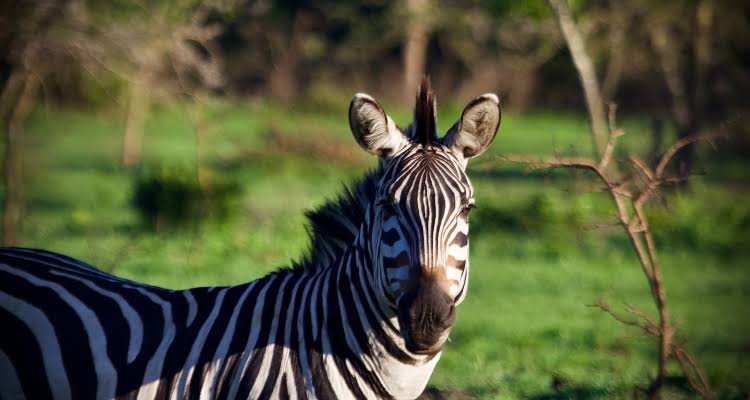
Lake Mburo is the park for zebras, with impala and other plains animals, and it is one of the few places in Uganda where you can walk among them with a ranger. The experience is quiet and close, and it suits travellers who are tired of vehicles. The park is a convenient stop on the road to the south-west, and a short stay gives a different feel from the bigger savannah parks.
Kidepo Valley, in the far north-east, offers dry-country landscapes, open valleys and a feeling of space that the other parks do not match, with a bird list of more than 475 species. It is remote and rewards travellers with time. Entry to the main parks costs about US$40 to US$45 per adult per day, and nature walk fees of about US$25 are quoted for several savannah parks in one operator page.
Primates: Gorillas, Chimpanzees and More
| Primate | Where | Permit (2024 to 2026) |
| Mountain gorilla | Bwindi and Mgahinga | US$800, or US$600 in the 2026 low season |
| Chimpanzee | Kibale, Kyambura, Budongo and Bugoma | US$250 at Kibale, US$100 at Kyambura, about US$130 at Budongo and about US$80 at Bugoma |
| Golden monkey | Mgahinga | US$60 |
| Other forest primates | Kibale, Bugoma, Budongo and Bigodi | Baboons, red-tailed monkeys, black-and-white colobus and others on forest walks |
Primate permits are the largest costs on a Ugandan safari, and they include park entry for the day, according to one guide. Our separate guides to gorilla trekking in Africa and to chimpanzee trekking in Uganda and Rwanda explain the experiences.
Birds: More Than a Thousand Species
- Uganda’s checklist is about 1,080 species in the fullest lists, the fourth highest in Africa, with 1,000 or more in most guides.
- The shoebill is most reliably seen at Mabamba Swamp near Entebbe, and also on the Nile at Murchison Falls.
- Bwindi has about 350 species including Albertine Rift endemics, and Queen Elizabeth has about 600.
- Kidepo has about 475 species, including ostriches and dry-country specials.
- Kibale and Budongo add forest birds such as the green-breasted pitta and Nahan’s francolin.
Birding fits into every safari, and a boat or a forest walk adds to the list. Our separate guide to birding safaris in Uganda explains the sites and the seasons.
How to Look: Game Drives, Boats, Walks and Nights
| Method | Best For | Tips |
| Early morning and late afternoon game drives | Lions, leopards, elephants and antelope | Leave at first light; animals rest in the midday heat |
| Boat cruises | Hippos, crocodiles, elephants and waterbirds | Afternoon cruises give good light for photographs |
| Walking with a ranger | Zebras at Lake Mburo and rhinos at Ziwa | Quiet, close and rewarding |
| Forest walks and treks | Primates and forest birds | Take a guide and a porter |
| Canoe at Mabamba | The shoebill | Take sun protection; there is no shade |
A good safari day starts early, rests at midday and ends with a drive or a cruise. Choose a driver-guide with a strong reputation for finding cats, and allow at least two nights in each major park.
Best Time for Wildlife Viewing
| Period | Conditions | Wildlife Notes |
| December to February | A dry season, with good game viewing in the north | A classic window for Murchison Falls and Kidepo |
| June to September | The main dry season and the busiest period | Animals gather near water in all the savannah parks |
| March to May | The long rains, with lush landscapes and lower prices | Animals disperse, and some tracks are harder |
| October and November | The short rains | Fewer visitors and good value |
Wildlife is present all year, and boat trips work in every month. Our separate guide to the best time to visit Uganda explains the calendar.
Sample Wildlife Itineraries
| Trip | Plan | Best For |
| 3 days, big game and the Nile | Ziwa rhino tracking, then Murchison Falls with a game drive and a boat trip | A short trip |
| 5 days, lions and water | Queen Elizabeth with Ishasha and a Kazinga cruise, plus Lake Mburo | Cats, hippos and zebras |
| 8 days, wildlife and primates | Murchison Falls, Kibale and Queen Elizabeth | Big game and chimpanzees |
| 10 days, the full Uganda | Ziwa, Murchison Falls, Kibale, Queen Elizabeth, Bwindi and Lake Mburo | Animals, apes and birds |
Frequently Asked Questions
Where can I see lions in Uganda?
In Queen Elizabeth, especially the tree-climbing lions of Ishasha, and in Murchison Falls and Kidepo.
Where can I see rhinos in Uganda?
At Ziwa Rhino Sanctuary on foot, with new reintroduction at Ajai Wildlife Reserve and Kidepo from 2026.
Where are the giraffes?
Murchison Falls, where Rothschild’s giraffes live, and Kidepo.
Does Uganda have the Big Five?
Yes, on a route: lions, leopards, elephants and buffalo in the savannah parks and rhinos at Ziwa.
When is the best time for wildlife viewing?
December to February and June to September, with boat trips possible all year.