Kibale National Park – The Primate Capital of Uganda
Kibale is a vast block of moist evergreen rainforest in western Uganda, near the town of Fort Portal, and it protects 13 primate species, more than any other park in the region and enough to earn it the title of primate capital of the world in several guides. About 1,500 chimpanzees live in its forest, divided into communities, a few of which are habituated to visitors.
Red colobus monkeys number in the thousands, and grey-cheeked mangabeys, L’Hoest’s monkeys, blue monkeys, black-and-white colobus, baboons and nocturnal bushbabies and pottos fill out the list. Around it lie crater lakes, tea estates and a community-run swamp where a morning’s walk can produce another dozen species. For visitors, it offers the most reliable chimpanzee encounter in Uganda and a pleasant, relaxed base in Fort Portal and the hills around.
This guide explains Kibale for travellers planning a stay. It covers the forest and its research history, the primates, chimpanzee tracking and the habituation experience with fees for 2026 and what is reported for 2027, the Kanyanchu and Sebitoli sectors, Bigodi Wetland Sanctuary, birds and other wildlife, the crater lakes and Fort Portal, lodges, how to get there, the best time to go, a short current health note and the mistakes to avoid. Published figures differ on the park’s size and on chimpanzee numbers, and the guide says so.
Kibale National Park at a Glance
| Question | Short Answer |
| Where | Western Uganda, near Fort Portal in Kabarole District |
| Size and status | About 766 to 795 square kilometres; the forest was gazetted in 1932 and made a national park in 1993 |
| Primates | 13 species, including about 1,450 to 1,500 chimpanzees and about 3,500 red colobus |
| Birds and mammals | About 325 to 375 bird species and about 70 mammal species |
| Chimpanzee permit | US$250, US$200 in the 2026 low season and US$300 reported from 2027 |
| Habituation experience | US$300, with US$400 reported from 2027, limited to four people per group |
| Best months | June to September and December to February, though tracking runs all year |
Kibale is the safe choice for a first chimpanzee trek, because the habituated communities are used to visitors and sightings are very reliable.
The Forest and Its Research Tradition
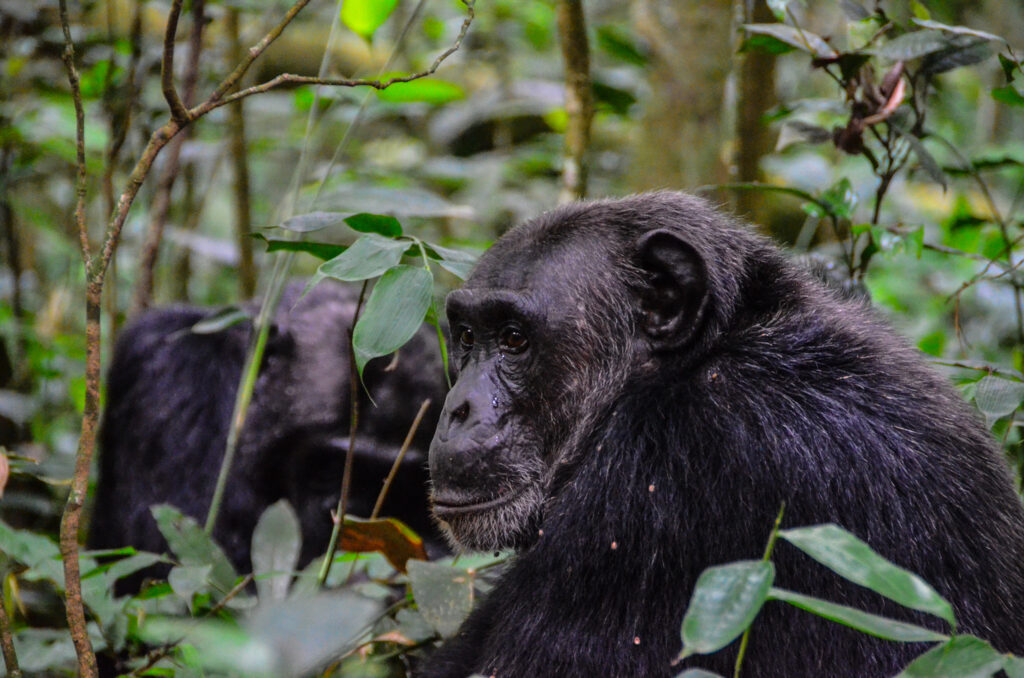
Kibale was first gazetted in 1932 and formally established as a national park in 1993, mainly to protect chimpanzees, after decades as a logged forest reserve. It forms a continuous block of forest with Queen Elizabeth National Park to the south, and its elephants travel between the two. The people who live around it are mainly the Batooro and the Bakiga. Robusta coffee grows natively in the forest area, and the black-eared ground thrush known as the Kibale ground thrush is described as endemic to the park.
The forest is also one of the most studied in Africa. The Makerere University Biological Field Station was founded in the 1970s by Thomas Struhsaker, and long-term research at Kanyawara and the Ngogo Chimpanzee Project has made Kibale a focal point for primate ecology. Those research zones are separate from the standard tourist tracking areas. Our separate guide to responsible tourism in Uganda explains how tourism and conservation connect.
The Thirteen Primates
| Primate | Notes |
| Chimpanzee | About 1,450 to 1,500 in the park, out of an estimated 5,000 in Uganda in one guide |
| Ugandan red colobus | About 3,500 in one guide, often seen on forest walks |
| Grey-cheeked mangabey | A large, dark monkey often seen in the canopy |
| Olive baboon | Common around the forest edge |
| Blue monkey and red-tailed monkey | Common forest monkeys |
| Black-and-white colobus | A striking, long-haired monkey |
| L’Hoest’s monkey | A forest guenon associated with the Albertine Rift |
| Vervet monkey, bushbabies and pottos | The vervet by day, and the bushbabies and pottos at night |
The list is as given in guides, and counts of 13 are consistent across the Uganda Wildlife Authority’s records. A leisurely guided walk can show several species, and a chimpanzee trek often adds more on the way. Our separate guide to wildlife safaris in Uganda explains where else to find primates.
Chimpanzee Tracking and the Habituation Experience
| Experience | What It Involves | Cost |
| Chimpanzee tracking | A briefing at the Kanyanchu visitor centre, a walk of minutes to hours with rangers and trackers and about an hour with a habituated community | US$250 in the 2024 to 2026 tariff, US$200 in April, May and November 2026 and US$300 reported from 2027 |
| Chimpanzee habituation experience | A full day with researchers and habituators following a semi-habituated group, limited to four people | US$300, with US$400 reported from 2027 and US$250 to US$300 in one older page |
| Primate walks and forest walks | Guided walks to see red colobus, monkeys and birds | Priced by the park; confirm locally |
| Minimum age | 12 in the guidelines cited by several guides | One guide says generally 15, so confirm |
One 2026 guide reports encounter rates above 90 percent in peak season, a figure that should be treated as indicative. Chimpanzees move quickly and often call, feed and travel, so a trek can feel like a chase. Our separate guide to chimpanzee trekking in Uganda and Rwanda compares Kibale with Kyambura, Budongo, Bugoma and Nyungwe.
Kanyanchu, Sebitoli and Bigodi
| Place | What It Offers | Notes |
| Kanyanchu | The main tourist hub, with briefings, habituated chimpanzee tracking and guided forest walks | The best base for a first trek; choose a lodge that can manage the early report time |
| Sebitoli sector | A northern sector of regenerating and mature forest with primates and birds, reached from the Fort Portal road | Solitude and a different atmosphere; activities and check-in can differ, so confirm locally |
| Bigodi Wetland Sanctuary | A community-run swamp walk about 4 to 5 kilometres from the park headquarters, with a raised boardwalk, 138 bird species in one guide, sitatunga, otters and primates | About US$20 to US$30 in guides; outside the national park and not covered by a chimpanzee permit |
A good Kibale day is a morning chimpanzee trek, a rest at lunch and an afternoon walk at Bigodi. Our separate guide to community-based tourism in Uganda explains how the Bigodi Wetland Sanctuary works and where its fees go.
Birds, Other Wildlife and the Forest
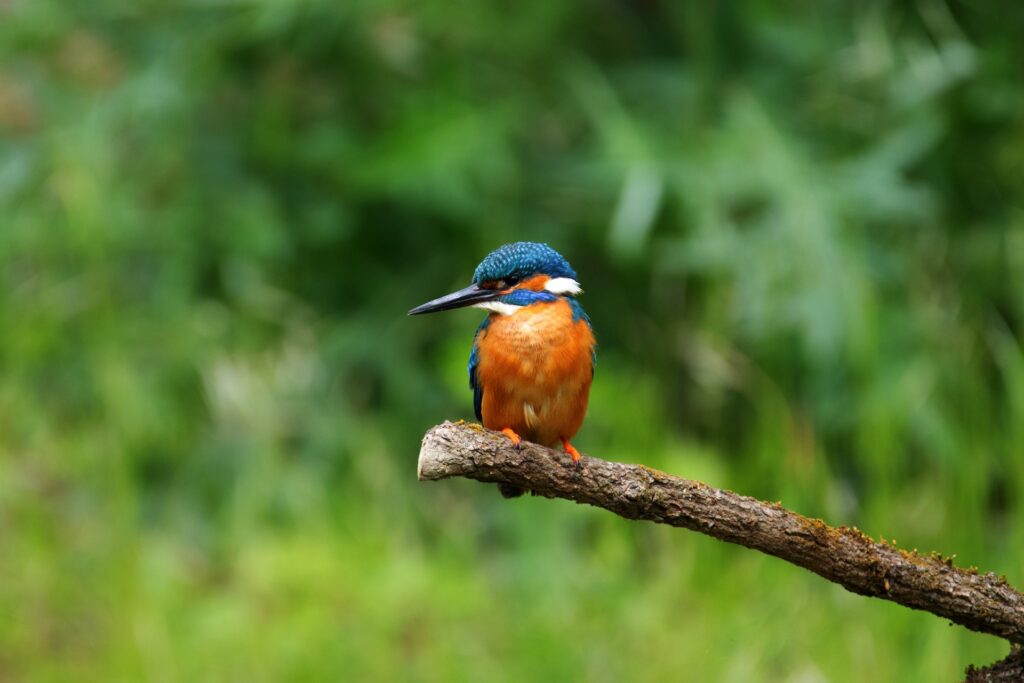
- About 325 to 375 bird species have been recorded, including forest birds such as the great blue turaco, with six Albertine Rift endemics in earlier research for this series and the green-breasted pitta at display sites with a guide.
- About 70 mammal species include elephants, which move between Kibale and Queen Elizabeth, leopards and buffalo, though the forest is not a place to expect big game.
- More than 350 tree species give the forest its structure,.
- Small life, from butterflies to chameleons, rewards slow walking.
Our separate guide to birding safaris in Uganda explains how Kibale fits with Semuliki, Queen Elizabeth and Bwindi.
Fort Portal, the Crater Lakes and the Tea Estates
Fort Portal is the base for most visitors, a pleasant highland town with tea estates and views of the Rwenzori Mountains on a clear day. The nearby Ndali-Kasenda volcanic crater lakes make a lovely road trip, with lodges perched on the rims, and photographers favour them at sunrise. The area is also home to the Tooro Kingdom’s palace, the Karambi Royal Tombs and the Amabere ga Nyina Mwiru caves, though the kingdom is in a period of mourning after the death of King Oyo in August 2026, so check access and etiquette before planning a visit.
Kibale pairs naturally with Queen Elizabeth to the south and Semuliki and the Rwenzori to the west. Our separate guides to cultural tours in Uganda, to the Rwenzori and to Queen Elizabeth explain how to link them.
Where to Stay and How to Get There
| Level | Examples Named in Guides | Reported Rates Per Person Per Night |
| Luxury | Primate Lodge Kibale, with nine forest cottages inside the park, Ndali Lodge and Kyaninga Lodge | About US$350 to over US$400 at Primate Lodge, about US$450 to US$610 at Kyaninga and about US$750 at Ndali |
| Mid-range | Kibale Forest Camp, Chimp’s Nest and Turaco Treetops | About US$120 to US$250 |
| Budget | Campsites and simple guesthouses near Kanyanchu and in Fort Portal | From low nightly rates |
| Getting there | By road from Kampala, a long drive, or as part of a western circuit between Murchison Falls, Queen Elizabeth and Bwindi | Confirm drive times with your operator |
Rates differ between guides, so ask for a written quote. Our separate guide to the best lodges in Kibale compares the options.
Best Time to Visit and a Current Health Note
- June to September and December to February are the drier months, with easier forest trails and the busiest period.
- March to May and October to November bring rain and mud, with discounted permits in April, May and November 2026.
- Wear waterproof boots, long sleeves and trousers and gloves, and carry water and a waterproof jacket.
- A yellow fever certificate is mandatory for Uganda, and malaria is present all year.
- Uganda says it is currently Ebola-free and restricts travel from the Democratic Republic of Congo; the outbreak is centred on Ituri province, with cases also reported in North Kivu, across the Rwenzori from this region, so check your government’s advice.
Our separate guide to the best time to visit Uganda explains the seasons.
Sample Itineraries
| Trip | Plan | Best For |
| 2 to 3 days | Drive or fly to Fort Portal, a chimpanzee trek at Kanyanchu and the Bigodi walk | A short primate trip |
| 4 days | Kibale with a habituation day, Bigodi and a crater lake lodge | Fit travellers who want more time |
| 7 to 8 days | Kibale, Queen Elizabeth and Bwindi | Chimpanzees and gorillas on one route |
| 9 to 10 days | Murchison Falls with Budongo, Kibale, Queen Elizabeth and Bwindi | Three forests and the main game parks |
Avoid trekking on the day you arrive after a long drive, and leave a rest day after a gorilla trek. Our separate guide to Uganda safari tours explains how to link regions.
Frequently Asked Questions
How many primate species does Kibale have?
13, with about 1,450 to 1,500 chimpanzees.
How much is chimpanzee tracking at Kibale?
US$250 in the 2024 to 2026 tariff, US$200 in the 2026 low season and US$300 reported from 2027.
What is the habituation experience?
A full day with researchers following a semi-habituated group, limited to four people, at US$300 with US$400 reported from 2027.
What is Bigodi Wetland Sanctuary?
A community-run swamp walk near the park, at about US$20 to US$30, with primates and birds.
When is the best time to visit?
June to September and December to February, though tracking is possible all year.