Mount Elgon National Park – Uganda’s Quiet Giant
Mount Elgon National Park is an extinct volcano with, according to one guide, the largest surface area of any extinct volcano in the world. Its highest point, Wagagai Peak, reaches 4,321 metres inside Uganda and sits on the rim of a vast caldera.
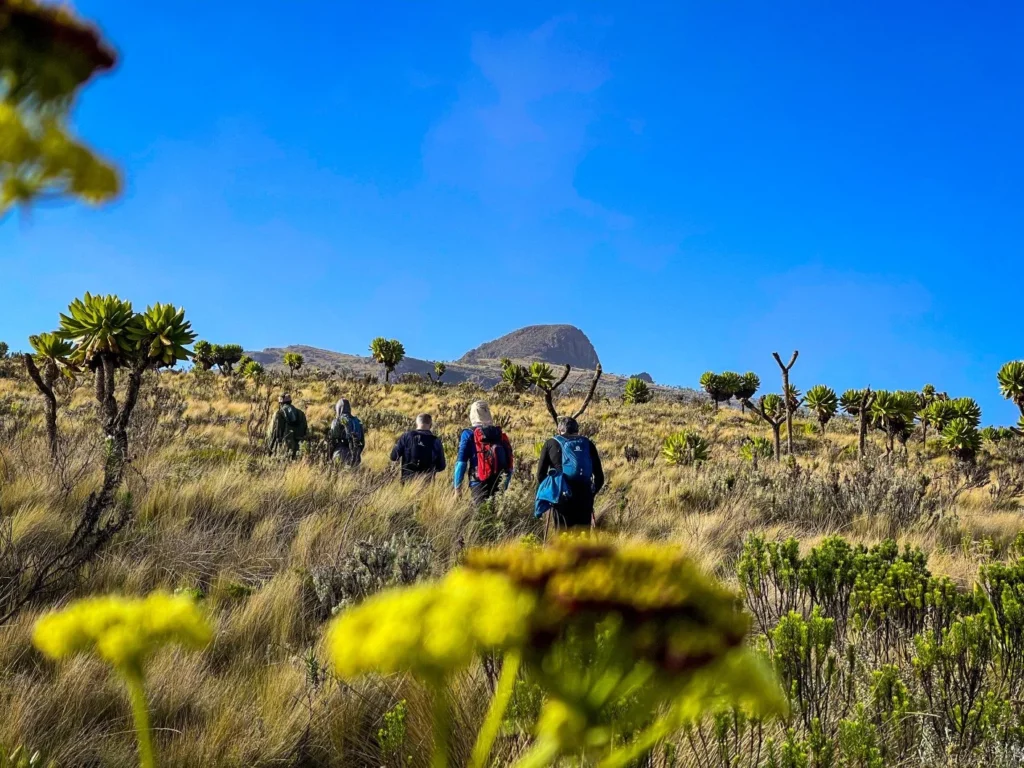
The mountain is cloaked in bamboo, giant heather and moorland, cut by gorges and waterfalls and riddled with caves where elephants and buffalo come to lick salt. Its slopes are home to farming communities, the Bagisu among them, and its foothills hold Sipi Falls, one of the loveliest places to stay in the country. You can climb it in three to six days with no technical skills, and you may well have the trail to yourself.
This guide explains Mount Elgon for travellers deciding whether and how to go. It covers the park and its setting, the four main trails and how to choose, what a trek costs and what shorter options exist, Sipi Falls and the foothills, caves, hot springs and wildlife, culture and respectful visiting, fitness and what to pack, the best months, how to get there, a short current health note and the mistakes to avoid.
Mount Elgon National Park at a Glance
| Question | Short Answer |
| Where | Eastern Uganda on the Kenyan border, with access from Kapchorwa, Sipi, Kapkwai, Budadiri and Bududa |
| Size and status | About 1,110 to 1,145 square kilometres on the Ugandan side; a national park since January 1994, after serving as a forest reserve from 1929 |
| Highest point | Wagagai Peak, 4,321 metres, entirely within Uganda |
| Main trails | Sasa, Sipi, Piswa and Bushiyi, of 3 to 7 days |
| Cost | About US$80 to US$100 a day with support, according to one guide |
| Best months | December to March and June to August |
| Other draws | Sipi Falls, caves, hot springs and Pian Upe Wildlife Reserve nearby |
Elgon suits travellers who want a real mountain without the cost and crowds of Kilimanjaro or the technical demands of the Rwenzori.
The Mountain and Its History
Mount Elgon straddles the Uganda and Kenya border, about 140 kilometres north-east of Lake Victoria by Wikipedia’s reckoning, and the area is protected by two national parks, one on each side of the border. The Ugandan side was gazetted as a forest reserve in 1929, became a Crown Forest in 1940 and a Central Forest Reserve in 1951, and was converted into a national park in January 1994, though some timber harvesting continued for a time. One guide says that in 2023 the park was given UNESCO Biosphere Reserve status.
The mountain’s scenery includes cliffs, caves, waterfalls, gorges, a caldera and hot springs. Five peoples live on its slopes, and one guide notes that Elgon once stood taller than Kilimanjaro, a claim that sits more comfortably as legend than as fact. Wagagai at 4,321 metres is described as the eighth highest peak in Africa, and Mubiyi, at about 4,211 metres, is another high point in Uganda.
The Four Trails Compared
| Trail | Start | Duration | Character |
| Sasa | Budadiri, at about 1,250 metres, on the western flank | 3 to 4 days | The shortest and steepest, climbing fast through bamboo; Sasa River Camp at about 2,880 metres; described as the most developed and scenic by one operator |
| Sipi | The Kapkwai Forest Exploration Centre, at about 2,050 metres | 4 to 6 days, about 56 kilometres | Longer and more gradual, passing Tutum Cave and leading to the caldera; the most scenic and varied |
| Piswa | Kapkwata, near the Kapkwai ranger station | 6 to 7 days, about 49 kilometres | The gentlest gradient and good wildlife viewing |
| Bushiyi | The Bushiyi trailhead | 3 to 4 days | A quieter route for strong hikers |
A common choice is to ascend by the Sasa trail and descend by the Sipi trail, which gives the shortest climb and the most scenic return. One guide also describes a trans-boundary option, starting in Uganda and descending into Kenya. Our separate guide to the Rwenzori Mountains explains a more demanding alternative for experienced trekkers.
What a Trek Costs
| Item | Reported Cost | Notes |
| Multi-day summit trek | About US$80 to US$100 per person per day with support, according to one guide | Often includes the guide, porters, cook, camping equipment and food on operator packages |
| Sipi Kapkwai nature hike and Chebonet Falls | About US$90 for foreigners, or UGX 150,000 for East African residents, in one guide | A forest walk and waterfall |
| Sipi Falls guided hike | About US$15 per person in one guide | A walk between the three waterfalls |
| Sunset walk | About US$10 per person | A short guided walk |
| Abseiling at Sipi Falls | About US$50 per person | An optional adrenaline activity |
| Mid-range lodge near Sipi | About US$120 to US$250 per person per night | Established lodges with strong views |
A permit from the Uganda Wildlife Authority is needed for park entry and hiking. One guide notes that the full summit trek costs considerably less than an equivalent Rwenzori or Kilimanjaro expedition. Our separate guide to Uganda safari prices explains how an Elgon extension fits into a wider budget.
Sipi Falls and the Foothills
Sipi Falls is a set of three waterfalls on the rim of the mountain near Kapchorwa, and it is the easiest and most popular introduction to Elgon. A guided hike between the three falls takes about two to three hours, with views across the plains towards Karamoja, and the area offers coffee tours, birdwatching, abseiling and a sunset walk. Lodges here are among the most scenic in Uganda, and a weekend based at Sipi is a good alternative for travellers who do not want a summit trek.
The foothills also have the Kapkwai Forest Exploration Centre, which offers day hikes and short forest circuits for birds and primates, and other waterfalls, including Chebonet Falls and the Sisiyi Falls near Buyaga. Our separate guides to Jinja adventure activities and to nature holidays in Uganda explain how to link Sipi with the Nile.
Caves, Hot Springs and Wildlife
| Feature | What It Offers |
| Caves | Kitum, Kapkwai and Khauka are named in guides; the caves are known for animals such as elephants, bush pigs and buffalo that visit at night to lick mineral salt, though the best-known salt cave, Kitum, is on the Kenyan side |
| Tutum Cave | On the Sipi trail, associated with ancient rock paintings in one guide |
| Hot springs | Warm springs near Budadiri, at about 48 degrees Celsius in earlier research for this series |
| The caldera | A vast volcanic bowl at the summit, with Endebess Bluff and Koitoboss Peak on the Kenyan side |
| Forest and moorland | Bamboo, giant tree ferns, rolling moorland and everlasting flowers, with birds and monkeys in the lower forest |
| Pian Upe Wildlie Reserve | A nearby reserve described by one guide as having lion, leopard and giraffe, with Karamojong cultural visits |
Large mammals are not the reason to climb Elgon, and the wildlife is best treated as a bonus. The caves and the scenery are the main attractions. Our separate guide to Kidepo Valley National Park explains the larger savannah wildlife of the north-east.
Culture and Respectful Visiting
- The slopes are home to farming communities, including the Bagisu, whose Imbalu circumcision ceremony is held on the mountain.
- Imbalu is a sensitive ritual and not a show, so do not attend any ceremony unless an operator who works with the community arranges it with permission.
- Coffee and farm visits around Sipi are good ways to meet local people, and buying directly from growers supports them.
- Ask before photographing people, and dress modestly in villages.
- Hire local guides and porters, who know the trails and benefit from your visit.
Our separate guide to community-based tourism in Uganda explains how to visit well.
Fitness, Preparation and What to Pack
| Topic | Advice |
| Fitness | If you can walk uphill for six to eight hours, you can reach Wagagai, according to one guide; no technical climbing skill is needed |
| Altitude | Wagagai is 4,321 metres, so allow time to acclimatise and tell your guide if you feel unwell |
| Clothing | Layers, a waterproof jacket and trousers, warm hat and gloves, and sturdy waterproof boots |
| Camping gear | Often provided on operator packages, including tents, sleeping bags and mats |
| Other items | Sun protection, water, snacks, a head torch and trekking poles |
| Porters and a cook | Included in many packages and strongly recommended |
Train with hill walks in the weeks before. Our separate guide to what to pack for a Uganda safari includes a base list, and the guide to gorilla trekking packing explains clothing for mud and rain.
Best Time to Go, Getting There and a Current Health Note
| Topic | What to Know |
| Best months | December to March and June to August, the drier months with clearer views |
| Wet months | March to May and October to November, with muddy, slippery trails |
| Getting there | By road from Kampala to Mbale and then to Budadiri, Sipi or Kapkwai, a long day; Jinja is a convenient stop on the way |
| Combine with | Jinja and the Nile, Pian Upe or Kidepo, and the Nyero rock paintings near Kumi |
| Health | A yellow fever certificate is mandatory for Uganda and malaria is present; Uganda says it is currently Ebola-free and restricts travel from the Democratic Republic of Congo |
Check your government’s advice before you go. Our separate guide to the best time to visit Uganda explains the seasons.
Sample Itineraries
| Trip | Plan | Best For |
| 2 days, Sipi | Sipi Falls hike, coffee tour and a sunset walk, with a Kapkwai forest walk | A weekend away from Kampala |
| 3 to 4 days, Sasa summit | Up and down the Sasa trail to Wagagai | Fit hikers short of time |
| 5 to 6 days, Sasa and Sipi | Ascend by Sasa and descend by Sipi, with a night at Sipi Falls | A fuller mountain trip |
| 10 days, east and north | Jinja, Sipi, Elgon, Pian Upe and Kidepo | Travellers who want the quiet side of Uganda |
Frequently Asked Questions
How high is Mount Elgon?
Wagagai Peak, the highest point, is 4,321 metres and lies entirely in Uganda.
How long does the climb take?
Three to six days depending on the trail, with Sasa the shortest and Piswa the longest.
How much does a trek cost?
About US$80 to US$100 per person per day with support, according to one guide.
Do I need technical skills?
No. The summit is a walk, though it needs fitness for six to eight hours of uphill hiking.
When is the best time to hike?
December to March and June to August.