Bwindi Impenetrable National Park – The Forest of the Gorillas
Bwindi impenetrable national park is a steep, tangled rainforest on the eastern edge of the Albertine Rift in south-west Uganda, folded into ridges and valleys and covered in vegetation so dense that trackers sometimes have to cut a path ahead of visitors.
It covers only about 321 square kilometres, and yet it holds an outsized share of life: about half the world’s mountain gorillas, 120 mammal species, around 350 bird species, hundreds of butterflies and more than 160 tree species. It was made a national park in 1991, inscribed as a UNESCO World Heritage Site in 1994 and has since become the most important gorilla destination in Africa, with four trekking sectors, about two dozen families open to visitors and a stream of lodges, community projects and trails around its edges.
This guide explains Bwindi for travellers planning a trip. It covers the forest and its history, the gorillas and how the permit system works, the four sectors and how to choose among them, the habituation experience, birding and other wildlife, the Batwa and community experiences that sit beside the park, costs and the changes reported for 2027, where to stay, how to get there, the best time to go, a short current health note and the mistakes visitors make. Numbers for gorillas, families and butterflies differ between guides, and the guide gives the ranges. Our separate guides to choosing a Bwindi sector, to gorilla trekking and to the gorilla permit go into more detail.
Bwindi Impenetrable National Park at a Glance
| Question | Short Answer |
| Where | South-west Uganda, on the eastern edge of the Albertine Rift, in the districts of Kanungu, Kabale and Kisoro |
| Size and altitude | About 321 square kilometres, from about 1,160 to 2,607 metres |
| Status | A national park since 1991 and a UNESCO World Heritage Site since 1994 |
| Gorillas | About half the world’s mountain gorillas, with between about 320 and 480 reported in different guides |
| Sectors | Buhoma, Ruhija, Rushaga and Nkuringo |
| Gorilla permit | US$800 at peak, US$600 in April, May and November 2026 and US$800 reported for 2027 |
| Birds | About 350 species, with 23 Albertine Rift endemics |
| Best months | June to September and December to February, though trekking runs all year |
Bwindi is a forest to go to with time, a plan and good boots. It rewards each of those more than most parks in Africa.
The Forest, Its History and the People Who Lived There
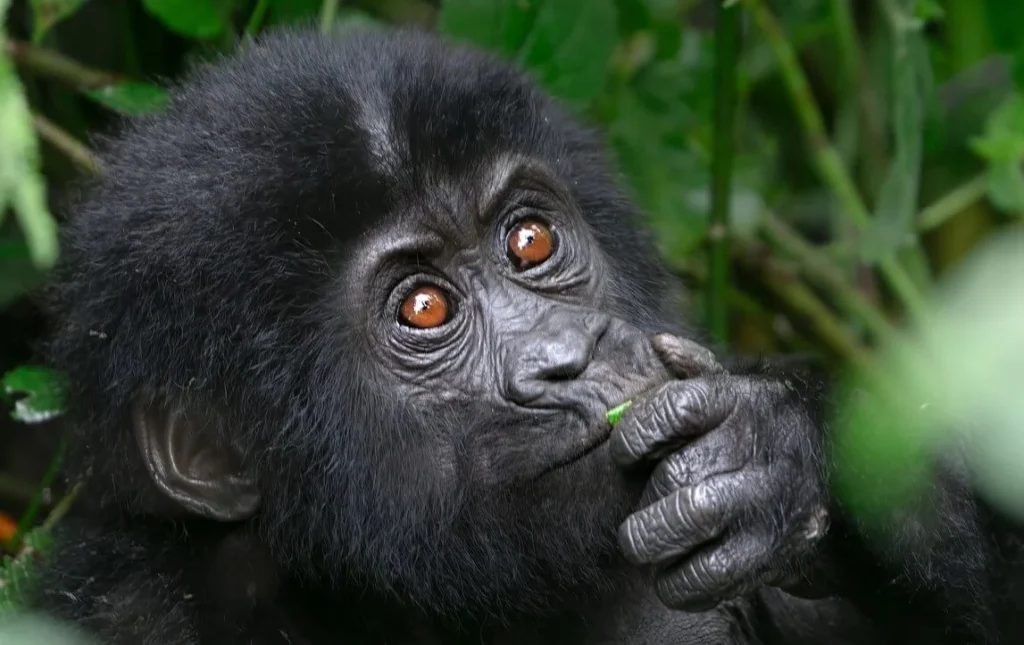
Bwindi is described as one of Uganda’s oldest and most biologically diverse rainforests, with one page saying it dates back more than 25,000 years, a claim to treat as approximate. Its protection began in the early twentieth century as forest reserves, which were enlarged in 1966 to cover almost 321 square kilometres. It became a national park in 1991, and in 1994 a further area of about 10 square kilometres was added when it was inscribed on the World Heritage List for its biodiversity as well as its gorillas.
The creation of the park had a human cost. The Batwa, forest people who had lived in the area for generations as hunter-gatherers, were evicted when it became a national park in 1991, and many have struggled since. Today, cultural experiences led by the Batwa, and the revenue-sharing scheme that sends part of each gorilla permit and park entry fee to bordering communities, are intended to give local people a stake in the forest. Our separate guides to responsible tourism in Uganda and to community-based tourism explain how that works.
The Gorillas and How Trekking Works
| Topic | What to Know |
| Numbers | About 400, or 45 percent of the world’s mountain gorillas, in one UNESCO-linked page, and at least 459 in the Bwindi to Sarambwe area in 2018 in another |
| First tourist family | The Mubare group at Buhoma, habituated for tourism in April 1993 |
| Families open to visitors | About 15 in one 2026 page, with other guides giving between 14 and 25, spread across four sectors |
| Group size | Up to eight visitors per family per day, which gives up to 120 permits a day in one guide |
| Time with the gorillas | One hour, after a trek that can last from about one hour to several hours |
| Minimum age | 15 years |
| Rules | About seven metres’ distance, no flash and no entry if you are unwell |
A day starts with a briefing at the sector headquarters, a family allocation and a walk with rangers and trackers who located the group that morning. The terrain is steep, muddy and often slippery, so fitness, boots and a porter matter. Our separate guides to gorilla trekking in Uganda and to gorilla trekking packing explain how to prepare.
The Four Sectors
| Sector | Position and Character | Why Choose It |
| Buhoma | North; the original and most developed trailhead, with a broad choice of lodges and community activities, and links to Ishasha in Queen Elizabeth | First-time trekkers who want convenience |
| Ruhija | East, at about 2,300 metres, cool and quiet, with the best birding | Birders and travellers who prefer quiet |
| Rushaga | South, with the most families and permits and the only sector for habituation in most guides | Short notice bookings and habituation |
| Nkuringo | South-west, a steep ridge with dramatic views | Fit trekkers who want drama |
The sector named on your permit decides where you sleep, since the sectors are hours apart by road. Our separate guide to choosing a Bwindi sector compares them in detail.
Habituation: Up to Four Hours With a Family
The gorilla habituation experience allows up to four hours with a semi-habituated family, with a maximum of four visitors a day and researchers present. It is offered in the Rushaga sector, with the family Bushaho named in one guide, and it is priced at US$1,500 in most guides, with US$1,800 reported from 2027 or from July 2026 in some. It suits fit travellers and serious photographers, and one operator suggests that a second standard trek in a different sector is often better value for others. Our separate guide to the gorilla habituation experience explains the day.
Birds and Other Wildlife
| Wildlife | What You Can Expect |
| Mammals | About 120 species, including ten primates such as chimpanzees, baboons and L’Hoest’s monkeys, forest elephants, bush pigs and giant forest hogs |
| Birds | About 350 species, including 23 Albertine Rift endemics, 14 of which are not recorded elsewhere in Uganda; the African green broadbill at Mubwindi Swamp in Ruhija is the star |
| Butterflies and reptiles | More than 200 species of butterflies, and dozens of reptiles and amphibians |
| Plants | More than 160 tree species, about 100 ferns and a very high count of flowering plants |
Birding in Bwindi is best with a local guide, and the endemics are present all year. The main nesting season is May and June. Our separate guide to birding safaris in Uganda explains the best sites.
Batwa Experiences, Community Walks and Other Activities
- The Batwa experience at Buhoma ranges from about US$30 to US$100 depending on the programme, and a Batwa trail at Mgahinga costs about US$80, with income going to Batwa families.
- The Buhoma village walk visits a healer, a school and banana-beer makers, and the Nkuringo community experience shares its fee between a foundation, guides and site owners.
- Forest nature walks, such as the Munyanga River trail at Buhoma, cost about US$40 in one operator page.
- Lake Bunyonyi, a short drive away, is a good place to rest after a trek, with a canoe trip at about US$20.
- A visit to the Conservation Through Public Health headquarters can be arranged through some lodges, at about US$250 per group in one guide.
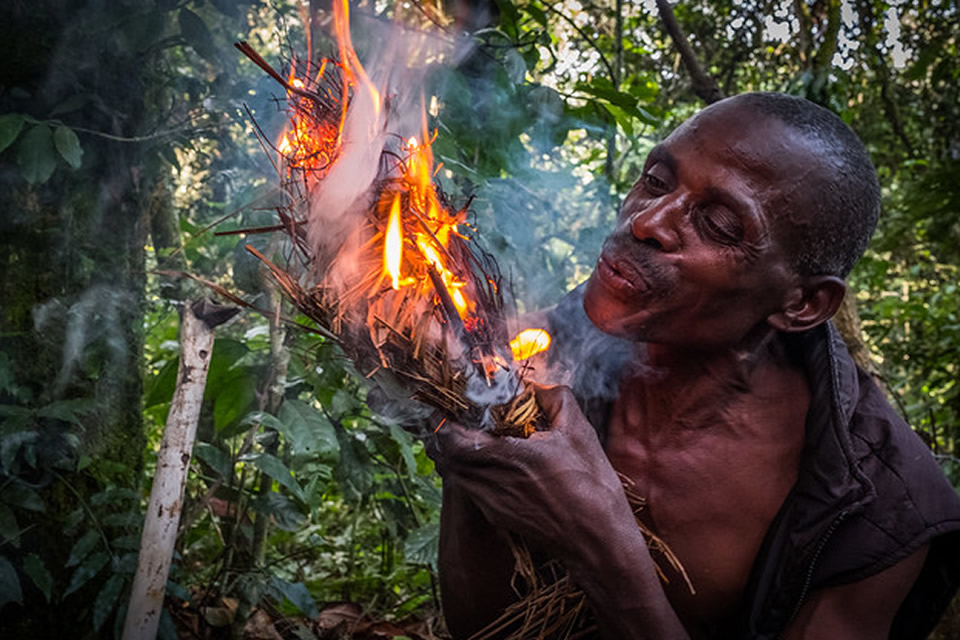
Batwa in Bwindi Impenetrable National Park
Choose community-run experiences and ask how fees are shared. Our separate guide to cultural tours in Uganda explains the Batwa and community options.
Costs and the 2027 Changes
| Item | 2024 to 2026 | Reported From 2027 |
| Gorilla trekking, foreign non-resident | US$800, or US$600 in April, May and November 2026 | US$800 |
| Gorilla habituation experience | US$1,500 | US$1,800 reported |
| Porter | About US$20 in one guide, plus a tip | Confirm |
| Lodging | From about US$50 at community camps to over US$1,000 per person per night at flagship lodges | Confirm |
| Fly-in, Entebbe to Kihihi | About US$350 to US$450 per person one way | Confirm |
Permits include the day’s park entry, according to one guide, but not lodging, transport, porters or tips. Our separate guides to the Uganda gorilla permit cost and to Uganda safari prices for 2027 explain the budget.
Where to Stay and How to Get There
| Sector | Examples Named in Guides | Reported Rates Per Person Per Night |
| Buhoma | Buhoma Community Rest Camp, Bwindi Lodge, Sanctuary Gorilla Forest Camp and Mahogany Springs | About US$70 to US$140 at the community camp, about US$380 to US$800 at Mahogany Springs and US$820 to US$1,780 at Bwindi Lodge in 2026 |
| Ruhija | Gorilla Mist Camp and a community rest camp | Confirm |
| Rushaga | Four Gorillas Lodge and Chameleon Hill Lodge | About US$400 to US$800 at Chameleon Hill |
| Nkuringo | Clouds Mountain Gorilla Lodge and Nkuringo Bwindi Gorilla Lodge | About US$900 to over US$2,000 at Clouds |
Rates for the same lodge differ widely between guides, so ask for a written quote. By road, Bwindi is a long day from Kampala or Entebbe, with Buhoma and Ruhija usually approached via Queen Elizabeth and the southern sectors from Kabale or Kisoro, and a fly-in to Kihihi saves a day. Our separate guide to accommodation in Bwindi lists the lodges.
Best Time to Visit and a Current Health Note
- June to September and December to February are the drier months, with firmer trails and the busiest crowds.
- March to May and October to November bring rain, mud and lower prices, and permits were discounted in April, May and November 2026.
- Book gorilla permits three to six months ahead for the dry seasons.
- A yellow fever certificate is mandatory for entry, and malaria is present all year.
- Uganda recorded 20 Ebola cases and two deaths earlier in 2026, says it is currently Ebola-free and restricts travel from the Democratic Republic of Congo. The outbreak is centred on Ituri province in Congo, with cases also reported in North Kivu and South Kivu, and guides describe the gorilla parks as distant from the epicentre, so check your government’s advice.
Check your government’s advice and the latest health updates before you go. Our separate guide to the best time to visit Uganda explains the seasons.
Frequently Asked Questions
Where is Bwindi Impenetrable National Park?
In south-west Uganda, on the eastern edge of the Albertine Rift, in the districts of Kanungu, Kabale and Kisoro.
How many gorillas live in Bwindi?
About half the world’s mountain gorillas, with between about 320 and 480 reported in different guides.
How much is a gorilla permit?
US$800 at peak, US$600 in April, May and November 2026 and US$800 reported for 2027.
How many sectors are there?
Four: Buhoma, Ruhija, Rushaga and Nkuringo.
When is the best time to visit?
June to September and December to February, though trekking is possible all year.